
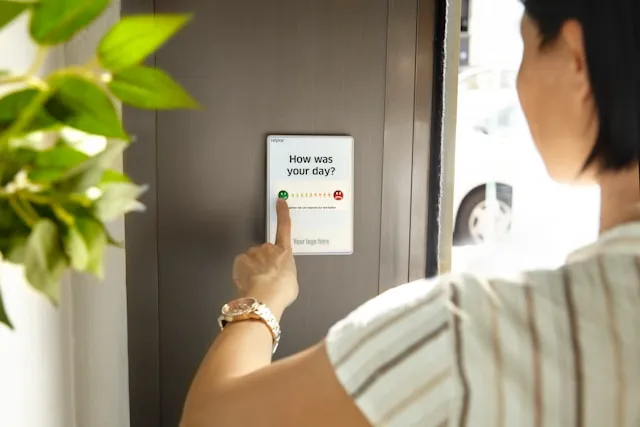
Employee engagement is at the heart of business concerns. To measure and act on it, many organizations turn to internal surveys. But are they really effective in understanding employees’ expectations and boosting engagement?
Between being an essential tool and sometimes a misunderstood process, internal surveys deserve to be rethought to unlock their full value.
Why internal surveys are useful
When conducted well, surveys offer real benefits:
- Giving employees a voice: everyone can express their feelings, even the quietest team members.
- Identifying early warning signs: drops in motivation, lack of recognition, management issues.
- Measuring engagement trends: comparing results over time to track the impact of HR initiatives.
- Enhancing transparency: showing that the organization cares about its teams’ experiences.
➡ According to Gallup, companies that regularly measure engagement are 23% more productive than those that don’t.
Limitations of traditional surveys
If surveys are misused, they can have the opposite effect:
- Too long or too infrequent: a large annual survey does not reflect everyday reality.
- Lack of anonymity: if employees fear repercussions, responses will be biased.
- No follow-up: asking questions without acting undermines trust and engagement.
- Too static a view: a one-off survey cannot capture fluctuations in engagement over weeks.
➡ A survey should not be an end in itself, but a starting point for action.
Best practices for surveys that truly engage
1. Prioritize frequency and simplicity
- Use pulse surveys (short, regular surveys of 5–10 questions).
- Recommended rhythm: monthly or quarterly, rather than one large annual survey.
2. Ensure anonymity and trust
- Communicate clearly about confidentiality.
- Use third-party tools to secure anonymity.
3. Vary survey formats
- Mix closed-ended questions (quantitative data) and open-ended questions (nuances, ideas).
- Complement with 1:1 interviews or focus groups for deeper insights.
4. Act quickly on results
- Share findings with the teams.
- Launch visible actions, even small ones, to show that employees’ voices are heard.
5. Connect surveys with engagement tools
- Integrate surveys with HR platforms to track trends in real time.
- Cross-reference results with other data (turnover, productivity, feedback).
6. Respond and ensure individual follow-up
- Employees expect a response: any expressed dissatisfaction must be addressed.
- Implement a transparent action plan, explaining what will be done—or why certain requests cannot be fulfilled.
➡ Listening is not enough; you must respond.
In conclusion
Internal surveys are not just an HR formality: when well-designed, they are a powerful lever for listening and building trust. Their effectiveness depends on three factors: regularity, the ability to act, and the ability to respond to employees.
➡ Rather than asking whether surveys should be conducted, the real question is: how can they be turned into a driver of sustainable engagement?